Lighting Tips to Highlight Your Trees
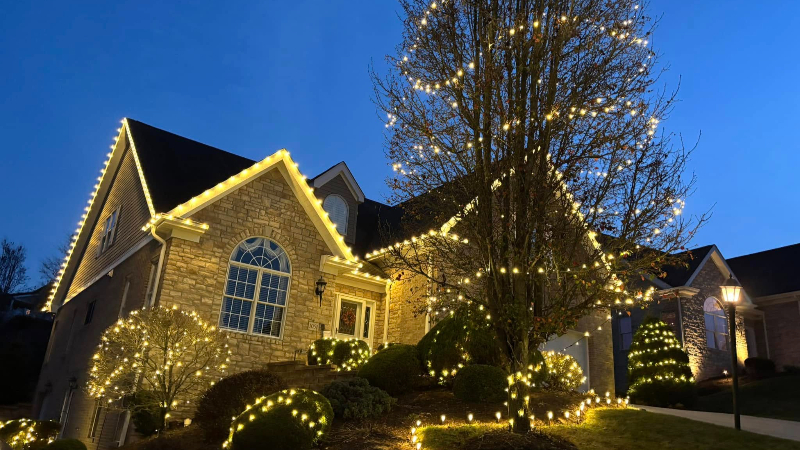
Trees are often the most dramatic natural feature on a property. Mature oaks, maples, ornamental flowering trees, and evergreens create structure, scale, and character during the day. At night, however, those same trees can disappear into darkness unless they are intentionally illuminated.
In Pittsburgh’s South Hills communities like Peters Township, Upper St. Clair, Mt. Lebanon, and Bethel Park, many homes feature mature trees that deserve to be showcased after sunset. When properly lit, trees add vertical dimension, depth, and elegance to the entire property. When lit incorrectly, they can look harsh, flat, or even distracting.
Professional tree lighting is about enhancing natural beauty without overpowering it. Thoughtful fixture selection, beam control, and placement make the difference between a refined nighttime focal point and an overexposed spotlight effect.
If your current outdoor lighting leaves your trees looking washed out or barely visible, a professionally designed upgrade can dramatically improve the overall appearance of your yard.
Why Trees Make Powerful Focal Points
Trees anchor a landscape. They add height to otherwise horizontal spaces and provide texture that reacts beautifully to light. Illuminating trees accomplishes several goals at once:
-
- Creates vertical interest that balances architectural lighting
- Adds depth to the yard by lighting background layers
- Enhances curb appeal from the street
- Improves visibility along property edges
A well-lit tree draws the eye naturally upward, making the entire property feel more dimensional and complete.
Uplighting vs Downlighting
Two primary techniques are used when lighting trees: uplighting and downlighting. Each creates a distinct visual effect and serves a different purpose.
-
- Uplighting
Uplighting involves placing fixtures at ground level and aiming them upward into the trunk and canopy. This technique highlights bark texture, branching structure, and leaf density. It creates dramatic vertical emphasis and works especially well for specimen trees near entryways or focal points. - Downlighting
Downlighting, often referred to as moonlighting, involves mounting fixtures higher in the tree and directing light downward. This produces a softer, more natural effect that mimics moonlight filtering through branches. It is ideal for illuminating seating areas, lawns, or pathways beneath mature trees.
- Uplighting
When to Use Each
Uplighting is typically best for highlighting architectural proximity, such as trees framing the front of a home. Downlighting is often preferred for backyard spaces where a subtle, ambient glow is desired.
In many cases, combining both techniques creates a layered effect. A tree may be uplighted to emphasize trunk structure while additional downlighting provides usable light below.
Beam Spread and Fixture Placement
One of the most critical aspects of tree lighting is beam selection and placement. Not all trees respond the same way to light.
-
- Narrow beam vs wide beam
Narrow beams are ideal for tall trees with defined trunks. They concentrate light upward without spilling excessively into surrounding areas. Wide beams are better suited for broad canopies or multi-trunk specimens where coverage needs to extend across more surface area. - Distance from the trunk
Fixtures placed too close to the trunk can create harsh hotspots and exaggerated shadows. Positioning the fixture slightly away from the base allows the beam to spread more naturally across the bark and into the canopy.
- Narrow beam vs wide beam
Angle also matters. Adjusting tilt and rotation ensures the light follows the natural shape of the tree rather than flattening it. Professional-grade fixtures allow for precise aiming and beam control.
Avoiding Common Mistakes
Tree lighting is often attempted with simple spotlights, but improper execution can diminish the effect.
-
- Overexposure
Using fixtures that are too bright or placing multiple lights at the same angle can create blown-out highlights. The goal is to enhance texture, not wash it out. - Flat lighting
Placing fixtures directly in front of the trunk without considering angle can eliminate shadow and depth. Slight side placement creates dimension and highlights natural contours. - Ignoring background balance
A brightly lit tree against a completely dark background can look isolated. Supporting lighting in adjacent areas maintains visual harmony. - Improper color temperature
Cool white lighting can make bark appear stark and unnatural. Warmer tones typically enhance wood texture and leaf color more effectively.
- Overexposure
Avoiding these mistakes ensures your trees enhance the overall design instead of distracting from it.
Mature vs Young Trees
Tree lighting is not static. As trees grow, lighting may need to be adjusted.
-
- Mature trees
Large, established trees often require multiple fixtures to evenly illuminate both trunk and canopy. Branch structure can create layered shadows that enhance depth when properly lit. - Young trees
Younger trees typically require smaller fixtures and narrower beams. As the tree grows, fixture position and aiming may need to be modified to maintain balance.
- Mature trees
Planning for long-term growth ensures your lighting continues to look intentional over time. During the design process, tree maturity and future expansion are taken into account.
Integrating Tree Lighting Into the Overall Design
Tree lighting should not exist in isolation. It works best when integrated into a broader lighting plan that includes architectural elements, pathways, and surrounding landscape features.
Layering tree accents with home lighting creates visual continuity from ground level to roofline. This balance prevents the yard from feeling top-heavy or uneven.
In neighborhoods throughout the South Hills, well-lit trees often become signature focal points that elevate the entire property’s nighttime presence.
Showcase Your Trees the Right Way
Trees are living sculptures. With proper lighting, they become striking nighttime features that enhance both curb appeal and outdoor ambiance.
Larkin Outdoor Lighting designs and installs custom lighting systems for homeowners throughout Pittsburgh’s South Hills, proudly serving:
-
- McMurray
- Peters Township
- Upper St. Clair
- Mt. Lebanon
- Bethel Park
- Canonsburg
- South Fayette
- Bridgeville
- Sewickley
- Moon Township
- Finleyville
- Venetia
- Thompsonville
As a certified OMNI RGB installer with a 5-star reputation, our focus is creating lighting systems that highlight natural beauty while delivering long-term durability.
If you want your trees to stand out after dark, the next step is a professional consultation. We will evaluate placement, beam angles, and fixture selection to ensure your landscape looks balanced and refined.
Schedule your tree lighting consultation today and see how professionally designed lighting can transform your property at night.